How to Cook Sweet Potatoes: Bake, Boil, Air Fry Guide
Sweet potatoes deliver nearly triple the glycemic impact depending on how you cook them. Boiling preserves nutrients and keeps blood sugar spikes minimal; baking at 425°F delivers caramelized perfection but sacrifices significant vitamin A and raises GI dramatically.
Oven temp for baking: 425°F · Roast time for chunks: 27-35 minutes · Microwave for speed: 5-10 min · Poke holes: With fork before roasting
Quick snapshot
- Boiling yields GI of 41-63 vs 81-94 for baked (PMC peer-reviewed study)
- Baking destroys 80% of vitamin A, double what boiling loses (NutritionFacts.org nutrition analysis)
- Exact GI impact of air-fried sweet potatoes lacks direct studies
- Long-term diabetes outcome data from cooking method switches absent
- 2011: First study on Jamaican sweet potato GI by cooking method published (PMC peer-reviewed study)
- 2016: Bentham Open confirms low raw/dehydrated GI data (PMC peer-reviewed study)
- Air fryer methods gaining popularity despite limited GI research
- Diabetes-focused cooking guidance increasingly prioritizes boiling
Cooking times and temperatures vary by method, with oven baking and stovetop boiling representing the most tested approaches.
| Label | Value |
|---|---|
| Top method | Baking at 425°F |
| Chunk roast time | 27-35 minutes |
| Alternative temp | 375°F for whole |
| Prep step | Poke with fork |
| Microwave time | 5-10 minutes |
| Air fryer stage 1 | 200°C 20 min |
| Parboil time | 15 minutes |
| Boiled GI range | 41-63 |
| Baked/roasted GI | 81-94 |
| Best for diabetes | Boiling |
What is the best cooking method for sweet potatoes?
The answer depends entirely on what you care about most. Baking at 425°F delivers that caramelized, crispy-skinned result that makes sweet potatoes worth waiting for. Roasting chunks at the same temperature takes only 27-35 minutes for something with more texture and browning than a whole baked potato. The key move: place halved sweet potatoes cut-side down directly on the baking sheet. This direct pan contact is what creates that golden, slightly charred exterior that most people associate with properly cooked sweet potatoes.
Oven baking basics
Preheat your oven to 425°F regardless of whether you’re cooking whole potatoes or chunks. The high heat triggers Maillard reactions that give sweet potatoes their characteristic sweet, nutty flavor. For whole potatoes, expect 45-60 minutes depending on size. The foolproof test: a fork slides in with no resistance. Line your baking sheet with foil if you’re worried about cleanup, and always, always poke holes in the skin before roasting—you’re not looking for an explosion, but steam needs somewhere to go.
- Preheat to 425°F
- Poke skin with fork 4-6 times
- Place cut-side down for chunks
- Foiled sheet prevents sticking
Roasting chunks
Chunk preparation changes everything. Cut sweet potatoes into ½-inch cubes and toss with a little oil before spreading on a rimmed baking sheet. At 425°F, these take 27-35 minutes, according to food science data from Chelsea’s Messy Apron. The goal is caramelization on the outside while the interior stays soft. Shake the pan halfway through—it’s not optional, it’s the difference between patchy browning and uniform deliciousness.
Why baking wins for texture
Baking concentrates sugars through moisture evaporation. The longer the cook, the sweeter the result. This makes it ideal for those who find boiled sweet potatoes too mild. But there’s a trade-off: baking at high temperatures causes an 80% drop in vitamin A levels, twice as much as boiling, according to NutritionFacts.org. The skin also suffers, with baking destroying over two-thirds of peel antioxidants—and the peel has nearly ten times the antioxidant power of the flesh.
Flavor chasers get what they want with baking, but nutrition maximizers lose substantial vitamin A and antioxidants in the process.
Is it better to boil or bake a sweet potato?
This is where the research gets genuinely interesting. Boiling sweet potatoes produces a glycemic index roughly half that of their baked or roasted counterparts. A published study on Caribbean sweet potato cultivars found baked and roasted GI values of 81-94, while boiling consistently yielded 41-63. That’s not a marginal difference—that’s the gap between a food that causes moderate blood sugar spikes and one that triggers significant ones.
Baking advantages
Baking wins on texture and taste. The high dry heat creates that crispy skin and caramelized interior that makes a baked sweet potato feel like an event rather than a side dish. You get that visual appeal: deeply browned edges, slightly collapsed flesh, kitchen smelling like autumn. For entertaining or when you want something that feels special, baking pulls ahead.
Boiling benefits
Boiling wins on health metrics. The moist heat preserves more antioxidants, causes less vitamin A loss, and produces a lower GI. Research indicates boiling retains most of the antioxidant power compared to roasting and steaming. The cell walls thin during boiling, and starch gelatinizes in a way that actually enhances nutrient bioavailability while keeping blood sugar impact lower. Plus, boiling makes peeling optional—something you can’t say about baking.
A PMC study on Jamaican sweet potato cultivars noted that cooking with skin intact increases free sugars availability, leading to higher GI in baking and roasting due to less starch gelatinization. Cooking method significantly impacts GI more than cultivar differences—the researchers found statistical significance at P<0.005.
Comparison table
Three cooking approaches, three different outcomes depending on what you prioritize.
| Method | GI Range | Vitamin A Retention | Best For |
|---|---|---|---|
| Baking (425°F) | 81-94 | ~20% preserved | Flavor, crispy skin |
| Boiling | 41-63 | ~40% preserved | Blood sugar control |
| Steaming | 63-77 | Moderate | Balance of both |
Which is the healthiest way to cook a sweet potato?
“Healthiest” depends on which health metric matters most to you. For antioxidant retention, boiling takes the crown. For glycemic control, boiling again. For vitamin preservation, steaming offers a middle path. For minimizing acrylamide formation—yes, that’s a concern with high-heat cooking—boiling or steaming beats baking and roasting.
Steaming vs others
Steaming sits in the middle on most metrics. A study on Beauregard sweet potato flesh found steamed GI of 63±3.6, compared to 64±4.3 for baked and 66±5.7 for microwaved. Steaming preserves more nutrients than baking while avoiding the waterlogged texture that boiling sometimes produces. At 100°C for 45 minutes, you get moderate results across the board—no best, no worst.
Boiling nutrition boost
Boiling changes the potato’s cellular structure in ways that actually improve some nutritional aspects. The process thins cell walls and gelatinizes starch, which enhances nutrient bioavailability. Longer boiling further lowers GI through resistant starch retention. According to Healthline’s analysis of glycemic data, boiled sweet potatoes consistently outperform fried, roasted, or baked on blood sugar metrics.
Baking retention
Baking at 163°C for one hour yields a GI of 64±4.3 for Beauregard flesh, according to Bentham Open research. That sounds moderate until you compare it to boiled versions at 41-63. The high-heat, dry environment of baking accelerates nutrient degradation more than wet-heat methods. Sweet potato peel—nearly ten times richer in antioxidants than the flesh—loses over two-thirds of those compounds when baked.
Deep frying deserves special mention for the wrong reasons. Beyond producing a GI of 76, it forms acrylamide, a potential carcinogen flagged by NutritionFacts.org. If crispy is your goal, air frying offers a safer alternative.
How do you cook a sweet potato?
Modern kitchens have more options than ever, and sweet potatoes adapt to nearly all of them. Here’s how to match your timeline and equipment to the right method.
Microwave quick method
When you need a sweet potato in under ten minutes, the microwave delivers. USDA research on Beauregard variety shows that microwaving at 1000W for 5 minutes yields a GI of 66±5.7—higher than boiling but faster than any oven method. Poke holes, nuke on high, and you’re done. The texture suffers (mushy rather than creamy), but for meal prep or weeknight sides, it’s legitimate.
- Pierce skin 4-6 times with fork
- Microwave on high 5-10 minutes
- Let rest 2 minutes (residual cooking)
- GI approximately 66
Air fryer steps
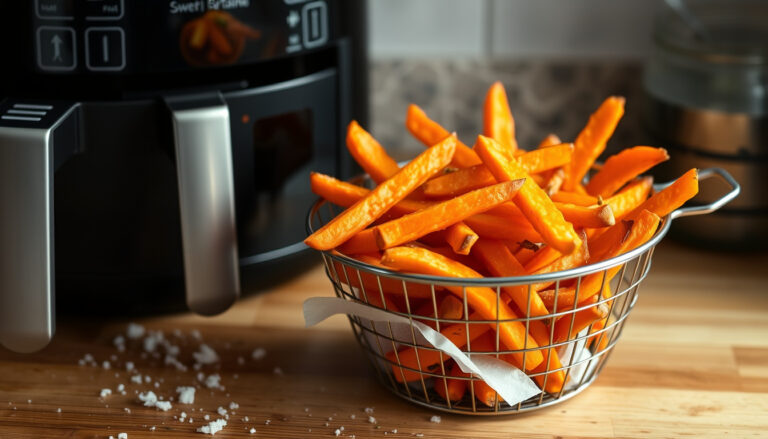
Air fryers have become the go-to for crispy-skin seekers who don’t want deep frying’s health baggage. A practical approach involves parboiling sweet potatoes 15 minutes in salted water before air frying at 200°C/390°F for 15 minutes, then flipping and continuing until the exterior crisps. According to Feast Glorious Feast, this parboil-first method prevents the overcooking fragility that makes pure-boiled sweet potatoes fall apart. Air frying avoids the watery texture of boiling while producing soft, sweet results with more exterior crunch than any other method.
Stovetop boiling
The classic approach remains the most forgiving. Peel or don’t, chunk or whole, add salt or don’t—the potato adapts. Bring water to boil, drop in your sweet potatoes, and simmer 20-35 minutes depending on size. The key advantage: even a distracted cook can’t burn it. The downside: you end up with soft potatoes that won’t caramelize or crisp. Great for mashing, fine for stews, unremarkable as a standalone dish.
Speed-seekers have three options: microwave for pure speed (5-10 minutes), air fryer for quick-crisp (30-40 minutes with parboiling), or accept that great sweet potatoes simply take time regardless of method.
What is the best way to cook a sweet potato for a diabetic?
For anyone managing type 2 diabetes, the cooking method choice carries real weight. Research from PMC found that boiled sweet potatoes minimize postprandial blood glucose spikes and may prove more efficacious in type 2 diabetes management. This isn’t theoretical—it translates to flatter blood sugar curves after meals.
Diabetes suitability
Sweet potatoes occupy a complicated space in diabetic diets. They’re nutrient-dense, high in fiber, and offer minerals like potassium. But their carbohydrate content means portions matter significantly. Cooking method amplifies or dampens that carbohydrate impact. A baked sweet potato with a GI of 81-94 behaves very differently in your bloodstream than a boiled one ranging 41-63.
Recommended methods
Boiling emerges as the clear recommendation for diabetic-friendly preparation. The process produces resistant starch that slows glucose absorption. Longer boiling times increase this effect. A study analyzing glycemic responses found that cooking method impacts GI more significantly than which sweet potato cultivar you choose. The Ganja cultivar from Jamaican varieties showed the lowest GI among those tested, but even the highest-GI cultivars when boiled outperformed low-GI cultivars when baked.
Portion tips
Even with boiling’s GI advantage, portion control matters. A typical serving size of half a medium sweet potato keeps carbohydrate intake reasonable. Pairing with protein or healthy fats further blunts blood sugar response. The American Diabetes Association recommends treating sweet potatoes as a carbohydrate choice and factoring them into meal planning rather than treating them as a free vegetable.
A Jamaican study published in 2011 was the first to report GI variations in Caribbean sweet potato cultivars by cooking method. Its findings fundamentally changed how diabetes nutrition guidance approaches this vegetable—method now matters as much as quantity.
Step-by-step cooking methods
Baking whole sweet potatoes
- Preheat oven to 425°F (220°C)
- Scrub potatoes and pat dry
- Pierce skin 4-6 times with fork
- Place directly on oven rack or baking sheet
- Bake 45-60 minutes until fork-tender
- Split lengthwise and serve
Boiling chunks
- Peel and cut into 1-inch cubes (optional)
- Bring salted water to boil
- Add potato chunks
- Simmer 20-25 minutes until tender
- Drain and season as desired
Air fryer method
- Parboil whole sweet potatoes 15 minutes in salted water
- Preheat air fryer to 200°C for 3-5 minutes
- Slice or cube parboiled potatoes
- Air fry at 200°C for 15 minutes
- Flip and continue until exterior is crispy
- Serve immediately
Upsides
- Boiling preserves most antioxidants and yields lowest GI
- Baking creates superior flavor and texture
- Air frying balances crisp exterior with reasonable nutrition
- Microwaving offers speed when time is limited
- Multiple methods suit different kitchen setups
Downsides
- Baking destroys significant vitamin A and antioxidants
- High-GI methods problematic for blood sugar management
- Microwave method produces mushy texture
- Air fryer research on GI remains limited
- Deep frying introduces carcinogen concerns
What the experts say
Consumption of boiled sweet potatoes could minimize postprandial blood glucose spikes and therefore, may prove to be more efficacious in the management of type 2 diabetes mellitus.
— PMC Study Authors (PubMed Central)
Boiling may actually retain most of the antioxidant power of sweet potatoes, compared to roasting and steaming.
— NutritionFacts.org nutrition science reviewer (Health Blog)
The best way to cook sweet potatoes is whichever way will get you to eat the most of them!
— NutritionFacts.org nutrition science reviewer (Health Blog)
The research keeps pointing toward the same inconvenient truth for anyone who loves a good baked sweet potato: the methods that taste best often compromise the health benefits that make sweet potatoes worth eating. Boiling delivers better glycemic outcomes and nutrient preservation, but it sacrifices that caramelized exterior and concentrated sweetness. Baking and roasting deliver on texture but cost you significantly in vitamin retention and blood sugar impact.
For home cooks without diabetes concerns, this trade-off might be irrelevant—enjoying a baked sweet potato trumps avoiding one. But for the growing population watching their glycemic response, boiling offers a path to include this nutritious vegetable without the blood sugar consequences.
Related reading: Signs of Vitamin D Deficiency · Do Eyelashes Grow Back
youtube.com, benthamopenarchives.com, feastgloriousfeast.com, healthline.com, ars.usda.gov
Baking sweet potatoes delivers naturally sweet flesh with crispy skin, as the crispy skin baking guide outlines with exact temperatures and timings.
Frequently asked questions
Do you peel sweet potatoes before boiling?
Peeling is optional when boiling sweet potatoes. Leaving the skin on increases cooking time but preserves some nutrients that concentrate near the surface. For mashed preparations, many cooks find peeling after boiling easier than peeling before. The GI doesn’t change dramatically based on peeling alone—the cooking method matters more.
Can type 2 diabetics eat sweet potatoes?
Yes, with careful preparation and portion control. Research shows boiled sweet potatoes produce significantly lower blood sugar spikes than baked versions. A typical serving of half a medium sweet potato, prepared by boiling, fits within diabetic meal planning. Always consult your healthcare provider for personalized guidance.
Are sweet potatoes good for type 2 diabetes?
They can be, when prepared properly. Sweet potatoes offer fiber, potassium, and antioxidants. Their carbohydrate content means portions matter, and cooking method significantly impacts how they affect blood sugar. Boiled preparation with appropriate portion sizes makes them a reasonable choice for many with type 2 diabetes.
How to cook sweet potatoes for mashing?
Boiling is ideal for mashing. Cut into chunks, simmer until fork-tender, then drain. Mash while hot with butter and milk or cream. Some cooks prefer baking first for more concentrated flavor, then mashing—the choice depends on whether you prioritize nutrition or taste intensity.
How to cook sweet potatoes for baby?
Steaming or boiling produces the softest texture for infant feeding. Cut into small pieces and steam 15-20 minutes or boil 15-20 minutes until very tender. No seasoning needed for babies under one year. The soft, mashed consistency works well for babies ready to progress beyond purées.
How to cook sweet potatoes cubes?
Cube into ½-inch pieces, toss with oil, and roast at 425°F for 27-35 minutes, shaking the pan halfway through. Alternatively, boil cubes for 20-25 minutes until tender. The roasted version caramelizes better; the boiled version has lower GI.
How to cook sweet potatoes quick?
Microwaving is the fastest method: poke holes, microwave on high 5-10 minutes depending on size, let rest 2 minutes. Air frying with prior parboiling takes 30-40 minutes total. Neither method produces results as flavorful as oven baking, but both serve when speed matters more than perfection.
More related posts
 How Old Is Donald Trump? Age, Birthday, and Presidential Context
 Crispy Sweet Potato Fries Air Fryer Recipe (12-15 Min)
 REAL ID Exceptions by State: What You Need to Know
 Card Shows Near Me: Dublin Ireland 2025-2027 Dates
 Who’s Playing Monday Night Football Tonight? Schedule & Time
 Legends of the Fall Cast: Full List, Roles & Behind the Scenes
 LA Clippers vs Houston Rockets Match Player Stats: Box Scores