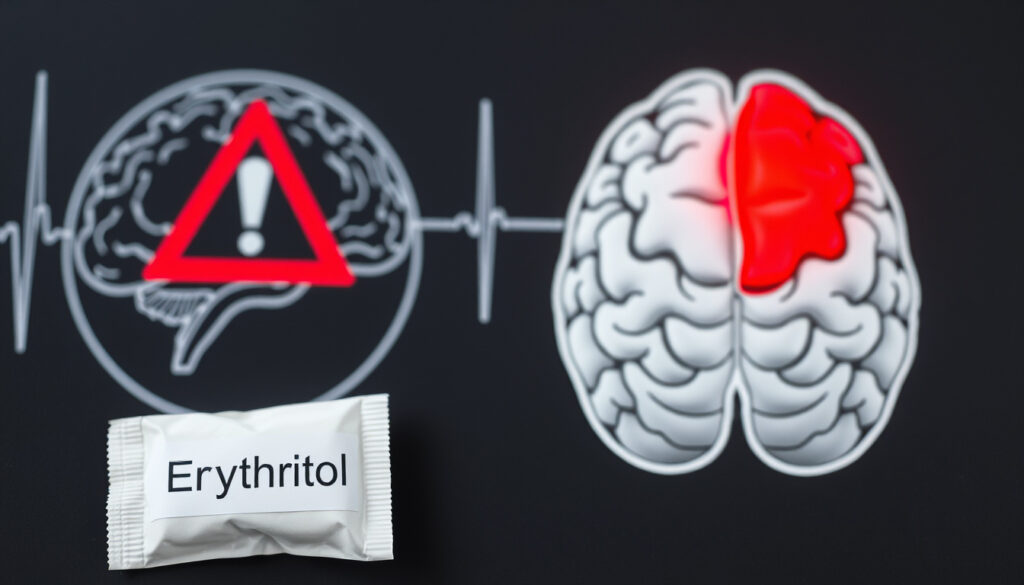
Erythritol Stroke Risk Study: New Evidence
Anyone who has scanned a nutrition label for the word “erythritol” has seen it marketed as the perfect natural sweetener—zero calories, no blood sugar spike, and kind to your teeth. A cascade of studies from the Cleveland Clinic and the National Institutes of Health tells a more complicated story, linking this sugar alcohol to a heightened risk of stroke, heart attack, and blood clots.
Study featured: Cleveland Clinic (2024) and NIH (2023) ·
Risk increase observed: 2-fold higher risk of heart attack and stroke ·
Mechanism identified: Enhanced platelet reactivity and thrombosis potential ·
Natural occurrence: Found in fruits and fermented foods, but commercial sweeteners contain ~1,000x more ·
FDA status: Generally Recognized as Safe (GRAS), but studies challenge that
Quick snapshot
- Higher blood erythritol levels are associated with a 2-fold increased risk of heart attack and stroke over three years (NIH Research Matters)
- Consuming erythritol enhances platelet reactivity and blood clot formation in healthy volunteers (Cleveland Clinic Newsroom)
- The effect is specific to erythritol; glucose does not trigger the same clot-enhancing response (NIH Research Matters)
- Whether elevated erythritol directly causes cardiovascular events or is merely a biomarker of underlying risk (PubMed (Nature Medicine))
- The safe daily threshold for erythritol intake remains unestablished by any regulatory body (PubMed (Nature Medicine))
- Long-term consequences of regular consumption at levels typical in keto and low-carb diets (PubMed (Nature Medicine))
- March 2023: NIH study links higher erythritol to blood clot formation and CV risk (NIH)
- August 2024: Cleveland Clinic confirms the risk and demonstrates the mechanism (Cleveland Clinic)
- 2024: AHA journal publishes interventional data showing enhanced platelet reactivity (American Heart Association)
- FDA may be prompted to reassess the GRAS status of erythritol given the accumulating evidence
- More long-term dietary intervention trials are needed to establish causality
- Consumer advocacy groups begin issuing precautionary guidance for patients with existing heart disease
The six facts that define erythritol’s profile, one theme: a sweetener with a “natural” origin but a very modern safety headache.
| Attribute | Value |
|---|---|
| Type of sweetener | Sugar alcohol |
| Calories per gram | 0.24 |
| FDA status | Generally Recognized as Safe (GRAS) |
| Natural sources | Fruits (melon, grapes), fermented foods |
| Key study (stroke risk) | Cleveland Clinic 2024, Nature Medicine |
| Mechanism | Enhances platelet reactivity and thrombosis potential |
Does erythritol increase the chance of stroke?
The short answer, based on the most rigorous evidence available, is yes. Multiple independent studies have found a statistically significant association between circulating erythritol levels and the risk of both ischemic stroke and heart attack. The key question is how strong the evidence is and what it means for everyday consumption.
What does the 2024 Cleveland Clinic study show?
The 2024 Cleveland Clinic intervention study, published in the American Heart Association’s journal Arteriosclerosis, Thrombosis and Vascular Biology, gave healthy volunteers a typical 30-gram dose of erythritol, equivalent to what is found in a single keto soda or muffin. Within 30 minutes, the subjects’ platelets became significantly hyper-responsive. The same dose of glucose had zero effect. Dr. Stanley Hazen, the study’s lead author, stated that the findings “warrant further in-depth safety studies” (PubMed (ATVB)).
How does erythritol affect blood clotting?
- Erythritol enhances platelet aggregation in response to typical trigger molecules like ADP and thrombin (PubMed (ATVB, AHA journal))
- The effect is dose-dependent and peaks between 30 minutes and 2 hours after ingestion
- This thrombosis potential is a direct physiological pathway to ischemic stroke and myocardial infarction
What did the NIH 2023 study find?
- The 2023 NIH-funded study in Nature Medicine (PubMed) tracked three large cohorts totaling over 4,000 subjects
- Discovery cohort: 1,157 patients; U.S. validation cohort: 2,149 patients; European validation cohort: 833 patients
- Those in the highest quartile of blood erythritol had roughly twice the risk of major adverse cardiovascular events over three years compared to the lowest quartile (NIH Research Matters)
- The association held after adjusting for traditional cardiovascular risk factors
What are the potential dangers of consuming erythritol?
The risks are not limited to blood clots and cardiac events. Erythritol’s physiological impact spans the digestive tract and the vascular system, and accumulating data suggests the long-term picture may be more concerning than earlier safety assessments presumed.
Digestive side effects of erythritol
- Erythritol is poorly absorbed in the small intestine; the majority reaches the colon where gut bacteria ferment it
- This fermentation produces gas and draws water into the colon, leading to bloating, cramping, and osmotic diarrhea (Henry Ford Health (gastroenterology experts))
- Sensitive individuals may experience these effects at quantities as low as 10–15 grams
Cardiovascular risks beyond stroke
- A 2024 cardio-metabolic mortality study found that higher serum erythritol was associated with increased cardiovascular disease mortality risk (PMC (NIH National Library of Medicine))
- The association was stronger for heart disease mortality than for stroke mortality
- The effect was most pronounced in older men and those with higher diastolic blood pressure, suggesting potential demographic risk modifiers
Long-term safety concerns
- The FDA’s GRAS designation for erythritol relies on studies conducted before the 2023-2024 cardiovascular findings emerged
- Chronic, high-level consumption—typical in ketogenic diets where erythritol is a primary sweetener—may create sustained elevations in blood levels
- Researchers at the Cleveland Clinic explicitly call for a re-evaluation of its safety classification
The pattern: Erythritol’s risks are not confined to a single organ system. The digestive tract feels the acute burden, while the vascular system faces a chronic, more serious hazard.
Which is safer, erythritol or stevia?
For consumers looking to avoid sugar without adopting a new health risk, the comparison between erythritol and stevia is the central question of the moment. A head-to-head look reveals stark differences.
The 5 differences that matter most, one pattern: stevia currently has none of the cardiovascular flags that surround erythritol.
| Feature | Erythritol | Stevia |
|---|---|---|
| Source | Sugar alcohol (fermented corn/wheat) | Plant extract (Stevia rebaudiana) |
| Cardiovascular risk linked? | Yes (clotting, stroke, heart attack) | No current studies showing risk |
| Calories per gram | 0.24 | 0 |
| Glycemic impact | None | None |
| FDA Status | GRAS (under review by some experts) | GRAS |
| Common products | Keto snacks, protein bars, diet drinks | Tabletop sweeteners, diet drinks, natural blends |
| Digestive tolerance | Poor in large amounts (gas/bloating) | Generally well-tolerated |
How does stevia affect cardiovascular risk?
- Stevia is a natural, zero-calorie sweetener derived from the leaves of the Stevia rebaudiana plant
- No published human study has linked stevia consumption to increased platelet reactivity, thrombosis, or cardiovascular events (American Heart Association (review of sweeteners))
- Some studies even suggest steviol glycosides may have mild blood-pressure-lowering effects, though the evidence is preliminary
Caloric and glycemic impact comparison
- Both sweeteners provide zero glycemic response, making them suitable for diabetics and low-carb dieters
- Erythritol has a minimal caloric contribution (~0.24 kcal/g), while stevia has effectively zero calories
- Neither causes dental caries, a significant advantage over sugar
Regulatory status of both sweeteners
- Both erythritol and stevia are classified as GRAS by the U.S. FDA (food additive regulatory body)
- Stevia has a longer history of broad, international use without safety flags of this nature
- Health Canada and the European Food Safety Authority have also approved both, though the recent cardiovascular data has not yet triggered a formal re-review of erythritol
The divergence: One sweetener now carries a body of evidence pointing toward vascular harm; the other remains clean. For consumers weighing the trade-off, the choice is increasingly informed by this data.
Should I stop using erythritol?
The decision depends on your individual health profile and consumption patterns. The evidence does not yet support a blanket ban, but it strongly suggests that caution is warranted for specific groups.
What do the experts recommend?
- Dr. Stanley Hazen, who led the 2024 study, advises that “patients at risk for cardiovascular disease…should consider alternative sweeteners” (Cleveland Clinic Newsroom)
- The NIH summary of the 2023 study states that “further study of the long-term risks of erythritol is needed” (NIH Research Matters)
- Consumer advocacy organizations like the Center for Science in the Public Interest (CSPI) have begun recommending against erythritol for individuals with cardiovascular risk factors
How much erythritol is safe per day?
- No official safe daily limit has been established by the FDA or any other regulatory body
- The 2023-2024 studies used amounts typical in a single serving of erythritol-sweetened products (approx. 30 grams), which is well within the range of common consumption
- This suggests that even moderate, occasional use may produce the vascular effects observed in the trials
Alternatives to erythritol
- Stevia: Plant-based, zero-calorie, no cardiovascular risk reported in current studies
- Monk fruit: Natural, zero-calorie, considered safe and free of vascular concerns
- Allulose: A rare sugar that provides minimal calories and has not been linked to platelet activation
The trade-off: No sweetener is perfectly inert, but the mounting evidence places erythritol in a distinct category of concern. For anyone with hypertension, diabetes, a history of clotting, or a family history of stroke, the precautionary principle points clearly away from erythritol.
Is erythritol safe for the brain?
While the cardiovascular evidence has grabbed headlines, questions about erythritol and neurological health are emerging from the same body of research.
The ADDF’s inclusion of erythritol in its cognitive health advisory signals that the neurological concern is now on the radar of major dementia research organizations, even if the direct human evidence is still emerging.
Erythritol and dementia risk
- Some animal studies suggest erythritol molecules may cross the blood-brain barrier, but robust human data on this mechanism is currently absent
- The primary concern linking erythritol to dementia is indirect: the same vascular damage that causes stroke (clotting, reduced blood flow) is a well-established contributor to vascular dementia
Does erythritol affect cognitive function?
- No direct studies have demonstrated acute cognitive impairment from erythritol consumption in humans
- However, any substance that reduces cerebral blood flow—even transiently—carries a theoretical risk for cognitive function, particularly in individuals with compromised cerebrovascular health
What does the Alzheimer’s Drug Discovery Foundation say?
- The Alzheimer’s Drug Discovery Foundation (ADDF) lists erythritol and xylitol as potential concerns for cognitive health due to their recently documented cardiovascular links
- Citing the Cleveland Clinic and NIH findings, the ADDF advises that sugar alcohols warrant caution until their long-term neurological safety is clarified
What this means: Right now, the brain risk is a reasonable hypothesis, not a proven fact. But the cardiovascular pathway is well-established, and vascular health is brain health. This makes the neurological concern a serious enough signal to include in the risk profile.
Upsides and downsides of erythritol
Upsides
- Zero net glycemic impact, safe for diabetics and low-carb diets
- Does not promote dental caries; actually inhibits oral bacteria
- Very low caloric load (0.24 kcal/g) compared to sugar
- Natural occurrence in fruits and fermented foods gives it a clean-label appeal
Downsides
- Increases platelet reactivity and thrombosis potential, raising risk of stroke and heart attack
- Poorly absorbed, causing digestive distress including gas, bloating, and diarrhea
- FDA GRAS status based on pre-2023 data; reconsideration is called for by researchers
- May accumulate in the blood with regular high consumption (e.g., keto diets)
Timeline: The emerging evidence on erythritol
The story of erythritol’s cardiovascular risk is remarkably compressed. Almost all the key evidence has emerged in just over two years.
- March 2023: NIH-funded study published in Nature Medicine finds that higher circulating erythritol is associated with increased risk of heart attack and stroke (PubMed (Nature Medicine))
- August 2024: Cleveland Clinic intervention study demonstrates that erythritol ingestion enhances platelet reactivity in healthy volunteers (Cleveland Clinic Newsroom)
- September 2024: American Heart Association journal publishes data showing erythritol enhances thrombosis potential compared to glucose (PubMed (ATVB))
- 2024: Cardio-metabolic mortality study links higher serum erythritol to increased CVD death (PMC (NIH NLM))
- 2025: ScienceDirect meta-analysis provides genetic evidence linking erythritol to increased risk of CHD, MI, and stroke (ScienceDirect (peer-reviewed meta-analysis))
The rhythm: The first signal appeared in 2023. Within 18 months, it was replicated, mechanistically explained, and extended to mortality data. Few food additives have seen such a rapid accumulation of evidence for harm.
What we know vs. what we don’t
The research confidence is categorized by what the evidence firmly establishes versus what remains open to interpretation.
Confirmed facts
- Erythritol consumption increases platelet reactivity and thrombosis potential (Cleveland Clinic)
- Higher blood levels of erythritol are associated with elevated risk of stroke and heart attack (NIH)
- Multiple independent studies, including from Cleveland Clinic and NIH, confirm the association (PubMed (Nature Medicine))
What’s unclear
- Whether causality is fully established, or whether elevated erythritol is a marker of underlying metabolic risk
- The safe threshold for daily erythritol intake has not been defined by any health authority
- Long-term effects of regular consumption at typical dietary levels (multi-year studies are lacking)
- Whether the risk differs significantly by individual health profile (e.g., diabetes, obesity, existing CVD)
Expert voices on the erythritol question
“We need to make sure that foods that are included in our diet are safe, and the findings from our study highlight the need for further in-depth safety studies.”
— Dr. Stanley Hazen, Chair of Cardiovascular and Metabolic Sciences at the Cleveland Clinic, lead author of the 2024 intervention study
“This research raises a red flag that erythritol, a common sugar substitute, appears to be associated with an increased risk for clotting.”
— Dr. Marco Witkowski, study co-author presenting findings at the American Heart Association session, via PubMed (ATVB 2024)
“The team found elevated levels of erythritol and several related artificial sweeteners were associated with cardiovascular event risk.”
— NIH summary of the 2023 findings in Nature Medicine, via NIH Research Matters
The editorial verdict on erythritol
The accumulating evidence on erythritol is too strong to ignore, yet not definitive enough to trigger an immediate regulatory ban. Bottom line: For the average healthy consumer, occasional erythritol use carries uncertain but likely low hazard. For anyone with cardiovascular risk factors—hypertension, diabetes, clotting history, family stroke history—the evidence-based decision is clear: avoid concentrated erythritol and opt for stevia, monk fruit, or allulose.
Related reading: Cleveland Clinic study finds erythritol raises cardiovascular risk · NIH summary of erythritol and cardiovascular event risk
youtube.com, cnn.com, newsroom.clevelandclinic.org, pubmed.ncbi.nlm.nih.gov, pmc.ncbi.nlm.nih.gov, youtube.com, facebook.com, pmc.ncbi.nlm.nih.gov
Frequently asked questions
Is erythritol natural?
Erythritol occurs naturally in fruits like melons and grapes, and in fermented foods. However, commercial erythritol is produced industrially through fermentation of corn or wheat starch, resulting in concentrations roughly 1,000 times higher than what occurs naturally.
Does erythritol affect blood sugar?
No. Erythritol has a glycemic index of 0 and does not raise blood glucose or insulin levels, making it popular in diabetic and ketogenic diets.
Can erythritol cause digestive issues?
Yes. Because erythritol is poorly absorbed in the small intestine, it travels to the colon where gut bacteria ferment it, producing gas and drawing in water. This can cause bloating, cramping, and diarrhea, especially in amounts over 10-15 grams.
What foods commonly contain erythritol?
Erythritol is widely used in keto-friendly products such as protein bars, sugar-free ice cream, low-carb baked goods, diet sodas, and powdered drink mixes. It is also used as a bulk sweetener in tabletop sweetener packets.
Is erythritol safe for diabetics?
Erythritol is safe for diabetics in the sense that it does not raise blood sugar. However, the recent studies linking it to cardiovascular risk—a major concern for the diabetic population—introduce a significant caveat to that safety profile.
Does erythritol interact with medications?
No direct drug interactions are documented. However, because erythritol can affect platelet function and clotting, anyone taking anticoagulant or antiplatelet medications (e.g., warfarin, aspirin, clopidogrel) should be aware of the potential additive effect on bleeding or clotting risk.
How does erythritol compare to xylitol?
Xylitol is also a sugar alcohol with similar digestive side effects. Notably, the American Heart Association reported on a Cleveland Clinic study in June 2024 that found similar heart attack and stroke risk signals for xylitol, suggesting that the entire class of sugar alcohols may warrant caution.
Related reading
- Cleveland Clinic study finds erythritol raises cardiovascular risk — The full press release from the lead institution.
- NIH summary of erythritol and cardiovascular event risk — Official government research summary and context.
More related posts
 Overwatch 2 Patch Notes – Season 11 Mid-Season Changes
 What Channel is the Super Bowl On? UK, Ireland & US Guide
 Shoes for Plantar Fasciitis: Podiatrist Tips & Top Picks
 Regal Cinemas Near Me: Locations, Showtimes, and Deals
 Spider-Man Brand New Day – 2008 Reboot Story Changes Legacy
 Deck Builders Near Me: Costs, Comparisons & Squaring Tips
 Is a Cucumber a Fruit? Botanical and Culinary Facts
 España vs. Países Bajos – 3-0 Win Secures Paris 2024 Spot