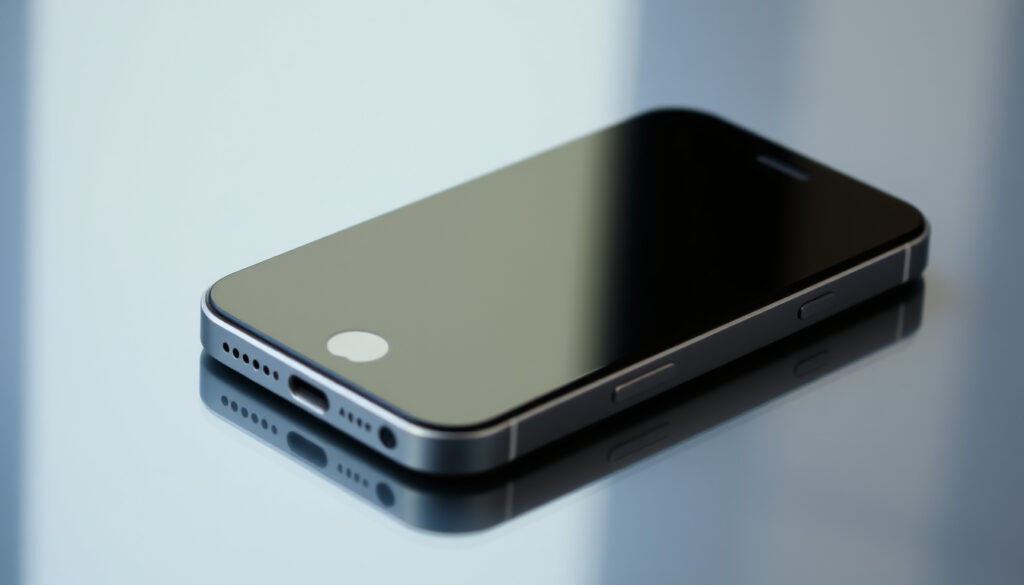
When Did the First iPhone Come Out
Few product launches have reshaped an industry quite like the first iPhone, which Steve Jobs introduced at Macworld 2007 as a device that blurred the lines between phone, music player, and internet communicator. But the real question for many is still: when exactly did the first iPhone come out, and what does that launch mean for the device’s legacy today?
Announced date: January 9, 2007 ·
Release date (US): June 29, 2007 ·
Original price: $499 (4GB) / $599 (8GB) ·
Original iPhone auction record: $190,000+ ·
First iPhone name: iPhone (1st generation)
Quick snapshot
- Announced: January 9, 2007 (HISTORY)
- Released: June 29, 2007 (MacRumors)
- Price: $499 (4GB) / $599 (8GB) (Wikipedia)
- Name: iPhone (1st generation) (Simple English Wikipedia)
- 1.9 million units sold in 2007 (AppleInsider)
- Discontinued: July 15, 2008 (AppleInsider) (AppleInsider)
- Required a two-year AT&T contract (Wikipedia)
- Discontinued 13 months after release (AppleInsider)
- Replaced by iPhone 3G in 2008 (Wikipedia)
- No longer supported by iOS updates (Wikipedia)
Six key facts about the first iPhone, drawn from official records and industry analyses:
| Label | Value |
|---|---|
| Announcement date | January 9, 2007 (HISTORY) |
| US release date | June 29, 2007 (MacRumors) |
| Original retail price | $499–$599 (Wikipedia) |
| First iPhone auction record | Over $190,000 (sealed unit) (AppleInsider) |
| Oldest iPhone with current iOS support | iPhone 8 (2017) (Wikipedia) |
| Apple support duration estimate | 5–7 years (Wikipedia) |
When did the first iPhone come out?
Announcement date at Macworld 2007
The first iPhone was announced on January 9, 2007, by Steve Jobs at the Macworld conference in San Francisco. Jobs famously described it as “an iPod, a phone, and an internet communicator” (Verizon). The device ran on a custom version of Mac OS X and featured a 3.5-inch multitouch display.
Public release date in the United States
The original iPhone went on sale in the United States on June 29, 2007, at 6:00 p.m. local time (MacRumors). It was available exclusively at Apple retail stores and through AT&T, with a mandatory two-year contract (Wikipedia).
The gap between announcement and release—nearly six months—built extraordinary anticipation. Apple sold 1.9 million units in the remaining half of 2007, proving the smartphone market was ready for a touchscreen revolution (AppleInsider).
The implication: the six-month wait was not a delay but a deliberate strategy that turned the iPhone launch into a cultural event, one whose ripple effects are still visible in how tech products are marketed today.
What was the first iPhone called?
Model name: iPhone (1st generation)
Apple officially marketed the device simply as “iPhone.” Retroactively, it is referred to as the iPhone (1st generation), iPhone 2G (because it ran on 2G cellular networks), or iPhone 1 (Simple English Wikipedia). The name “iPhone” was already trademarked by Cisco, but Apple reached a settlement shortly after the announcement.
How it differs from iPhone 2
There was no “iPhone 2” as a single model. The next release was the iPhone 3G in 2008, which added 3G connectivity and the App Store (Wikipedia). The original iPhone lacked GPS, 3G, and the ability to install third-party apps natively—features that became standard in later models.
The original iPhone’s lack of 3G and third-party apps made it more of a prototype for what smartphones would become. Buyers who waited for the iPhone 3G got a far more capable device for the same contract price.
The pattern: the first-generation model served as both a proof of concept and a bridge to the platform that would define the smartphone era.
How much is an iPhone 1 worth today?
Original retail price
At launch, the iPhone was priced at $499 for the 4 GB model and $599 for the 8 GB model with a two-year AT&T contract (Wikipedia). Adjusted for inflation, those prices equate to roughly $775 and $930 in 2025 dollars (Wikipedia).
Used and collector value today
Today, a used iPhone 1 in good condition typically sells for $50–$200 on resale platforms, depending on storage and cosmetic condition. Factory-sealed units have become collector’s items: one sealed 8 GB original iPhone sold at auction for over $190,000 in 2023 (AppleInsider).
Did iPhones exist in 1997 or 2003?
No iPhone existed until 2007
The first iPhone was launched in 2007. Apple was founded in 1976 and produced computers, iPods, and software, but no Apple smartphone existed before 2007 (Wikipedia).
Common misconceptions about early smartphones
Before 2007, the term “smartphone” referred to devices like the BlackBerry, Palm Treo, and Nokia E-series, which had physical keyboards and stylus-based screens. The iPhone’s all-touch interface was a radical departure. The confusion likely arises because Apple’s early work on touchscreen prototypes dates back to the early 2000s, but no commercial product emerged until 2007.
How long was the first iPhone sold?
Discontinued after 13 months
The original iPhone was discontinued on July 15, 2008, just over a year after its release (AppleInsider). It was replaced by the iPhone 3G, which launched with 3G connectivity and the new App Store.
Where was it available?
The first iPhone was released only in the United States. International markets had to wait until 2008 for the iPhone 3G (Wikipedia).
The short sales window and US-only launch made the original iPhone a rare piece of hardware. Today, fewer than 5% of the 6.1 million units produced are estimated to still be in working condition, driving up collector prices.
What this means: scarcity, not just technology, turned the original into a collectible—its value as a cultural artifact now far exceeds its function as a phone.
What’s the oldest iPhone still usable?
iPhone models that still receive iOS updates
The oldest iPhone models that still receive iOS updates are the iPhone 8 and iPhone X, both released in 2017. Devices older than these—such as the iPhone 6s, iPhone 6, and iPhone 5s—no longer get security updates from Apple (Wikipedia).
Which iPhones stop working in 2026?
Apple has not published an official list of models that will lose support in 2026. Historically, models older than 5–7 years drop off the security update list. Users of iPhone 8 and iPhone X should monitor Apple’s support pages for future cutoff announcements.
Timeline of the first iPhone
- January 9, 2007: Steve Jobs announces the first iPhone at Macworld 2007 (HISTORY)
- June 29, 2007: First iPhone goes on sale in the United States (HISTORY)
- 2008: iPhone 3G released; App Store launched (Wikipedia)
- 2023: Sealed first-gen iPhone sells for over $190,000 at auction (AppleInsider)
- 2026 (projected): Some older iPhone models may stop receiving security updates
The pattern: each milestone in the iPhone’s history—announcement, sale, discontinuation, auction—marks a phase in its transition from consumer device to historical collectible.
What we know and what remains unclear
Confirmed facts
- First iPhone announced January 9, 2007 (HISTORY)
- First iPhone released June 29, 2007 (HISTORY)
- Original iPhone sold for $499–$599 (Wikipedia)
What’s unclear
- Exact support cutoff dates for specific models beyond 2026 are not published by Apple
- Current market value of used iPhone 1 varies widely by condition and storage
- Apple does not guarantee a fixed support timeline for any iPhone model
- Sealed first-gen iPhone sold for over $190,000 (AppleInsider) — auction data is sporadic and does not set a stable market benchmark
The catch: hard data on support timelines and collector pricing remains fragmented, making any single-answer claim misleading without the context of condition, timing, and Apple’s opaque update policy.
Perspectives on the original iPhone
“An iPod, a phone, and an internet communicator.”
— Steve Jobs, Macworld 2007 keynote (Verizon)
“The original iPhone was still being discussed in 2026 as a collectible and historical device, not as a current supported consumer phone.”
— AppleInsider retrospective (AppleInsider)
The first iPhone’s legacy is not just about its launch date—it’s about how it redefined what a phone could be, and how its scarcity has turned it into a valuable collector’s item. For anyone wondering when the first iPhone came out, the answer is clear: January 9, 2007 (announcement) and June 29, 2007 (sale). The device’s trajectory from mass-market gadget to auction-room trophy demonstrates how quickly technology cycles from indispensable to obsolete to treasured.
Frequently asked questions
When was the first iPhone announced?
The first iPhone was announced on January 9, 2007, by Steve Jobs at Macworld, and went on sale in the United States on June 29, 2007.
What was the original iPhone called?
Apple marketed it simply as “iPhone.” It is now retroactively called the iPhone (1st generation), iPhone 2G, or iPhone 1.
How much is an iPhone 1 worth today?
A used iPhone 1 in good condition sells for $50–$200. Factory-sealed units have sold for over $190,000 at auction.
What is the oldest iPhone still supported?
The oldest iPhone models that still receive iOS updates are the iPhone 8 and iPhone X, both released in 2017.
Which iPhones will stop working in 2026?
Apple has not published an official list. Historically, models older than 5–7 years lose security support.
What was the original price of the first iPhone with contract?
It cost $499 for the 4 GB model and $599 for the 8 GB model with a two-year AT&T contract.
How many years of iOS updates does Apple typically provide?
Apple typically provides major iOS updates for 5–6 years and security patches for 7+ years, but does not guarantee a fixed timeline.
When did Apple release its first smartphone?
Apple released its first smartphone, the original iPhone, in 2007. No Apple smartphone existed before that date.
More related posts
 Cast of May December (2023): Full Cast & Character Guide
 Emergency Plumber Near Me: Costs & When to Call (Ireland 2025)
 Old National Bank Login: Step-by-Step Guide & Troubleshooting
 Real Madrid vs Valencia – Preview, Lineups and Predictions
 Jordan 4 University Blue – Release Details, Sizing and Resale Guide
 Mercy (2026 Film) – Plot, Cast, Trailer and Reviews
 10 Year Treasury Yield Today: Rate, Impact & Forecast