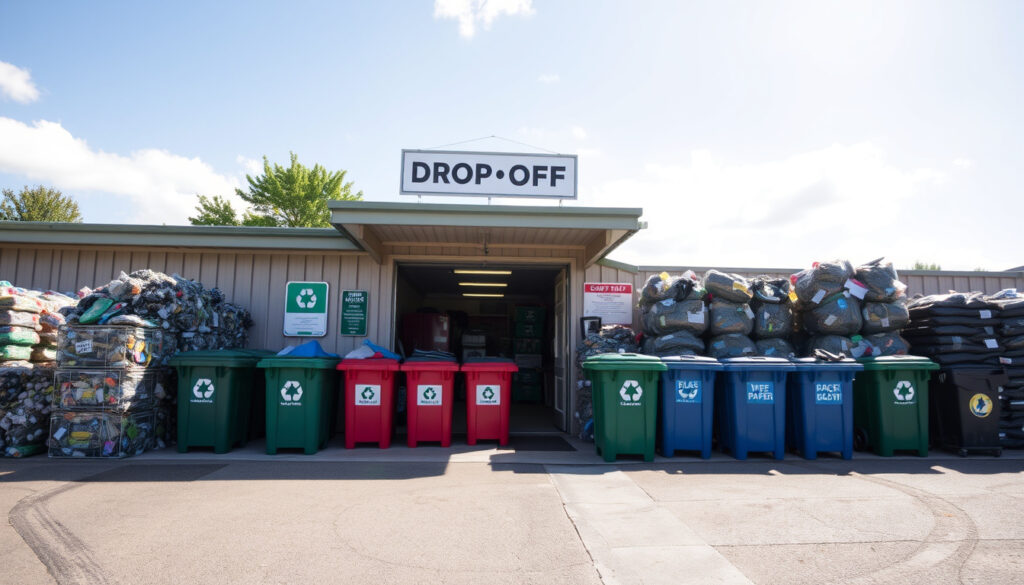
Find a Recycle Center Near Me: Free Drop-Off Guide
You’ve probably stood in your kitchen holding an empty yogurt pot or an expired Ozempic pen, wondering exactly where it’s supposed to go — that’s the moment most of us realise recycling rules are anything but uniform. This guide cuts through the confusion, showing you what your local recycle centre actually accepts, what it costs, and how to handle the tricky items – from old bras to old Tupperware – based on official Irish and US guidelines.
Recycling centres in Dublin City 3 main civic amenity sites (Ringsend, North Strand, Ballymun) ·
Free household e-waste recycling All items with a plug or battery accepted free at WEEE Ireland drop-offs ·
Textile recycling rate Over 60% of discarded clothing and textiles can be reused or recycled ·
Cost for pensioners in Ireland Bin charges apply; no automatic exemption, but some local authorities offer waivers ·
Yogurt pot disposal Yogurt and dairy products belong in food waste (if local council collects), but plastic pots must be rinsed and recycled separately ·
Medical sharps disposal Used needles and pens must go in approved sharps containers, never in household recycling
Quick snapshot
- Dublin City Council recycling centres accept household waste free of charge (Dublin City Council – official waste guidance)
- WEEE Ireland provides free electronics recycling at over 2,000 drop-off points (WEEE Ireland – compliance scheme)
- Exact pensioner exemption policies differ by local authority (Dublin City Council – bring centre page)
- Some private recycling centres may charge for certain items; not all list fees online (Dublin City Council – bring centre page)
- Bulky waste charges vary by council and are not always listed online (Dublin City Council – bring centre page)
- Ballymun Recycling Centre open Mon–Wed 9am–5pm, Thu–Fri 9am–6pm, Sat & bank holidays 9am–4pm, Sun closed (Dublin City Council – Ballymun page)
- Use mywaste.ie map to locate your nearest recycling centre (mywaste.ie – national waste portal)
Five key facts that define Ireland’s recycling centre landscape, drawn from official council and national databases:
| Fact | Value |
|---|---|
| Dublin recycling centres | 3 (Ringsend, North Strand, Ballymun) |
| Free e‑waste drop-offs in Ireland | 2,000+ (WEEE Ireland) |
| Textile recycling banks in Dublin | Over 200 locations (Bring Banks) |
| Cost for household waste at civic sites | Free |
| Pensioner bin charge exemption | Not automatic; varies by council |
Where can I recycle?
Knowing where to drop off your recyclables is the first hurdle. Ireland offers a patchwork of civic amenity sites, bring banks, and private facilities – each with its own rules.
Using local authority recycling centres
- Dublin City Council operates three civic amenity sites: Ringsend, North Strand, and Ballymun (Dublin City Council – bring centre page).
- South Dublin County Council runs four recycling centres, including Ballymount and Ballyogan (South Dublin County Council – recycling centre page).
- Searchable maps on mywaste.ie (national waste portal) let you filter by location and waste type.
WEEE Ireland drop-off points for electronics
WEEE Ireland runs over 2,000 free drop-off points across the country for any item with a plug or battery (WEEE Ireland – free recycling locator). Accepted items include toasters, kettles, phones, laptops, and even electric toothbrushes – no purchase necessary.
Bring banks for glass, cans and textiles
Bring banks are scattered across Dublin and accept glass bottles, aluminium cans, and textiles. Dublin City alone has more than 200 textile bank locations (Dublin City Council – bring centre page).
Finding private recycling centers that pay
Some private scrap yards pay for metals – for example, copper, aluminium, and lead. However, most household recycling centres in Ireland are free or charge only for non-standard waste (Dublin.ie – waste & recycling guide).
The easiest way to find your nearest centre is mywaste.ie (national waste portal) – it covers all local authorities in one search.
The pattern: Use mywaste.ie to locate your nearest free recycling centre, and always check the accepted items list before visiting to avoid fees.
Is recycling free in Ireland?
Cost is the biggest question when you approach the gate. Here’s the split between free and fee-based drop-offs.
Free household waste at civic amenity sites
- Dublin City Council confirms no charge for vehicles carrying only packaging material (paper, glass, cardboard, cans, plastic bottles) and all electrical/electronic equipment (Dublin City Council – bring centre page).
- South Dublin County Council accepts paper, cardboard, glass, aluminium cans, plastic bottles, textiles, batteries, and domestic electrical appliances free of charge (South Dublin County Council – recycling centre page).
Charges for commercial or bulk waste
The table below details the fees for non-standard waste at South Dublin County Council recycling centres.
| Waste type / vehicle | Charge (€) | Source |
|---|---|---|
| Car with green waste only | 9.50 | South Dublin County Council |
| Car with general waste | 15.00 | South Dublin County Council |
| Car/van/estate/jeep with general waste | 21.00 | South Dublin County Council |
| Car + single-axle trailer with general waste | 42.00 | South Dublin County Council |
| Medium van (max 5.8 m³) with general waste | 60.00 | South Dublin County Council |
Pensioner bin charge exemptions
Pensioners are not automatically exempt from bin charges. Some local authorities offer waivers or reduced rates – for example, Fingal County Council provides a waiver for eligible pensioners (Fingal County Council – domestic waste page). Always check with your own council.
What counts as “household” waste is narrower than you think. Bulky items like carpets, mattresses, and old paint always incur a fee (Dublin City Council – bring centre page).
The implication: Household recycling is free at civic amenity sites, but bulky or commercial waste always costs money.
What to do with old bras and knickers?
Textile recycling is straightforward – but only if you follow the rules.
Textile recycling options: clothes banks and charity shops
- Bras and knickers can be placed in textile recycling banks if they are clean and dry (Recycle Now – clothing and textiles guide).
- Charity shops like Oxfam and the Irish Cancer Society also accept old bras for resale or rag processing (Oxfam Ireland).
What is accepted in a clothes bank?
- Recycle Now advises that all clothing, including socks and underwear, can be recycled in textile banks (Recycle Now – clothing and textiles guide).
- South Dublin County Council explicitly states textiles and clothing are accepted free, but cushions, carpets, soiled clothing, duvets, and pillows are not (South Dublin County Council – recycling centre page).
Can old socks go in the recycle bin?
No – textiles should never go in your household recycling bin unless your local council explicitly allows it. Use dedicated textile banks or charity shops instead (Recycle Now – clothing and textiles guide).
Every year, over 60% of discarded clothing can be reused or recycled – but only if it’s clean and placed in the correct bin. Soiled garments ruin entire bales (Recycle Now – clothing and textiles guide).
The takeaway: Clean textiles belong in clothes banks or charity shops, never in the household recycling bin.
Can yogurt go in food waste?
Yes – but only the contents. The pot is a different story.
Separating dairy products from packaging
- Yogurt and other dairy products are food waste and can go in food waste caddies where collected (Dublin City Council – bring centre page).
- Plastic pots and lids must be rinsed and placed in the recycling bin, not food waste (Recycle Now – food waste guide).
How to dispose of cheese and yogurt containers
- Cheese and yogurt containers with metallic layers (e.g., foil lids) need separation: lid into aluminium recycling, pot into plastic recycling (Recycle Now – food waste guide).
- Check local council guidelines; many Irish councils collect food waste separately (e.g., Dublin City provides brown bins for organic waste).
Local food waste collection rules
Dublin City Council supplies households with a brown bin for food and garden waste. If you’re in a different council area, check mywaste.ie (national waste portal) for your local service.
The rule: Dairy contents go in food waste; plastic pots go in the recycling bin after rinsing.
How to dispose of Ozempic pens and needles?
Medical sharps are hazardous waste – never throw them in household recycling or general waste.
Using a sharps disposal service
- Used Ozempic pens and needles are medical sharps and must go in a designated sharps bin (NovoCare – safe disposal guide).
- Novo Nordisk provides a mail-back program for safe disposal through NovoCare (NovoCare – safe disposal guide).
Returning used pens to pharmacies
- Many pharmacies accept full sharps containers for incineration – check with your local chemist (HSE – sharps disposal guidance).
- Never place sharps or biohazard waste in recycling bins or general waste bins.
Mail-back programs are free but can take weeks. For immediate disposal, a pharmacy drop-off is faster – but requires an approved sharps container (NovoCare – safe disposal guide).
The consequence: Medical sharps must go in a sharps bin – never in household recycling – and pharmacies offer the fastest disposal.
How to Use a Recycling Centre: Step by Step
Follow these steps to make your visit quick, cheap, and rule-compliant.
- Check your council’s website – confirm opening hours and what’s accepted free of charge.
- Sort your items at home – separate recyclables, textiles, electronics, and hazardous waste.
- Rinse containers – yogurt pots, cans, and bottles should be clean and dry.
- Pack for self‑service – many centres require you to unload your own car into designated skips.
- Pay any fees on arrival – check if your local centre uses Pay by Plate or card at the gate.
- Ask staff if unsure – site operators can tell you which skip to use for tricky items like Tupperware.
The takeaway: Pre-sorting and checking the council website saves time and avoids unexpected fees.
What we know for sure vs. what’s still unclear
Confirmed facts
- Dublin City Council recycling centres accept household waste free of charge (Dublin City Council – official waste guidance)
- WEEE Ireland provides free electronics recycling (WEEE Ireland – compliance scheme)
- Textile banks accept clean clothing, including underwear (Recycle Now – clothing and textiles guide)
- Medical sharps require special disposal (NovoCare – safe disposal guide)
What’s unclear
- Exact pensioner exemption policies differ by local authority (Dublin City Council – bring centre page)
- Some private recycling centres may charge for certain items; not all list fees online
- Bulky waste charges vary by council and are not always listed online
- Tupperware recyclability depends on local plastic sorting capabilities (mywaste.ie – national waste portal)
The pattern: The rules are clear for standard materials, but pensioner exemptions and Tupperware recycling remain uncertain.
Expert perspectives on recycling in Ireland
“Electricals and electronics should never go in the general waste bin. Every item with a plug or battery can be recycled for free at one of our 2,000 drop-off points.”
WEEE Ireland – compliance scheme
“If it’s clean, dry, and bagged, we can recycle your old clothes – even knickers and socks. But once they’re damp or soiled, they’re rubbish.”
Recycle Now – clothing and textiles guide
“Never put used needles or pens in the household bin. They’re classified as hazardous medical waste and must be disposed of through a sharps bin.”
“Our recycling centres accept all packaging waste free of charge. For bulky items like carpets or old paint, there’s a small fee.”
Dublin City Council – official waste guidance
The pattern across all official sources is clear: free recycling exists for standard household materials, but the moment waste is bulky, hazardous, or commercial, fees kick in. For Irish households, the smartest move is to separate your waste at home before you drive to the centre – and always check the council’s website before you leave.
socialrecycleit.com, dublinohiousa.gov, panda.ie, chathamcountync.gov, goloadup.com, facebook.com, dublinohiousa.gov, dublin.moderngov.co.uk, data.smartdublin.ie
Frequently asked questions
What are the opening hours of Dublin recycling centres?
Ballymun Recycling Centre is open Mon–Wed 9am–5pm, Thu–Fri 9am–6pm, Sat & bank holidays 9am–4pm, closed Sundays (Dublin City Council – Ballymun page). Other centres follow similar schedules; check individual pages.
Can I recycle batteries at a recycling centre?
Yes – domestic batteries are accepted free of charge at all Dublin City Council recycling centres (Dublin City Council – bring centre page).
Is there a limit on how much I can drop off?
Household amounts are accepted free. Commercial quantities or large volumes may incur charges (South Dublin County Council – recycling centre page).
Do I need to sort items before bringing them to a centre?
Yes – staff will direct you to separate skips for paper, cardboard, plastics, glass, metals, textiles, and electronics. Pre-sorting saves time (Dublin City Council – bring centre page).
Can I recycle furniture or large appliances?
Large appliances (fridges, washing machines) are accepted free under WEEE Ireland. Furniture may be accepted for a fee – check with your local centre (WEEE Ireland – compliance scheme).
Are there recycling centres that pay cash for metals?
Some private scrap yards pay for copper, aluminium, lead, and brass. Municipal civic amenity sites do not provide cash payments (Dublin.ie – waste & recycling guide).
How do I find a clothes bank near me?
Use the textile bank locator on mywaste.ie (mywaste.ie – national waste portal).
What should I do with old paint or chemicals?
Old paint, chemicals, and solvents are hazardous and must be brought to a civic amenity site for safe disposal – fees may apply (Dublin City Council – bring centre page). For more on paint disposal, see our guide on Paint Store Near Me: Is Professional or DIY Better in Ireland?
For more local service guides, see our Tow Company Near Me: Costs, Safety Rules & 24/7 Towing Guide.
For Dublin households, the choice is clear: use the free recycling centres for standard materials, separate hazardous and bulky waste, and always check the latest rules before you go. The cost of getting it wrong – a mixed load rejected or a fine – far outweighs the small effort of preparation.
More related posts
 Chronic Venous Insufficiency Symptoms – Signs, Stages, Relief
 Boruto: Two Blue Vortex Manga & Anime Status, Chapters
 Theaters Near Me Showtimes — Dublin Cinema Listings Today
 Emily Alyn Lind Movies and TV Shows: Full Filmography
 Love Notes Ariana Grande – Eternal Sunshine Album Context
 Best Mexican Restaurant Near Me in Dublin, Ireland
 Altered Carbon Season 2: Why It Was Bad & Canceled
 AAA International Driving Permit: How to Get It Fast