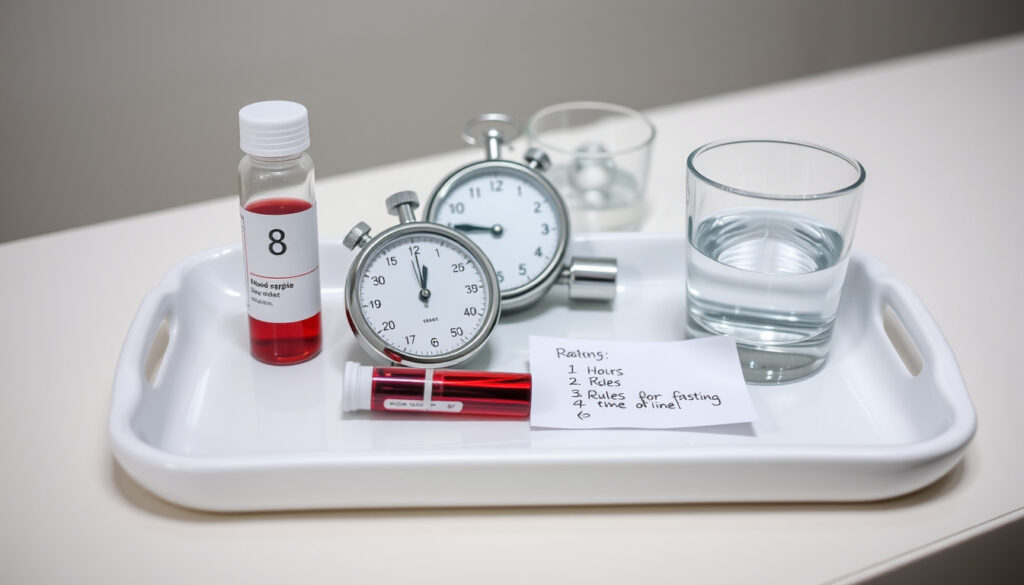
Fasting for Blood Work: Rules, Duration, and What to Avoid
You’ve set the alarm, skipped breakfast, and now you’re staring at a glass of water wondering if even that is allowed. Fasting before blood work is one of those medical instructions that sounds simple but leaves plenty of room for doubt, so this guide cuts through the confusion with clear, evidence‑based rules — how long to fast, what you can drink, and exactly what to do if you accidentally break the fast — so your test results stay reliable and your appointment goes smoothly.
Standard fasting duration: 8–12 hours · Allowed during fast: Water only · Common tests requiring fasting: Glucose, lipid panel, metabolic panel · Duration for glucose test: 8 hours · Duration for lipid panel: 12 hours
| Metric | Value | Source |
|---|---|---|
| Typical fasting window | 8–12 hours | Cleveland Clinic |
| Allowed drink | Water (no flavor) | Cleveland Clinic |
| Test examples with fasting | Fasting glucose, lipid panel, basic metabolic panel | Quest Diagnostics |
| Tests that may not require fasting | Some newer lipid panels, HbA1c | WebMD |
| Common accidental break | Coffee or tea | UW Health |
| Best action after accidental break | Reschedule or inform lab | UW Health |
Quick snapshot
- 8–12 hours, depending on the test (Cleveland Clinic (leading U.S. academic medical center))
- Glucose tests require at least 8 hours (LifeLabs (Canadian lab network))
- Lipid panels require 10–12 hours (UW Health (University of Wisconsin health system))
- Water only – plain, no additives (Cleveland Clinic)
- Prescription medications if approved by your doctor (WebMD (health information publisher))
- Food of any kind (Quest Diagnostics (major clinical laboratory))
- Coffee (including black) (Cleveland Clinic)
- Tea, juice, alcohol, chewing gum, smoking, exercise (Salinas Valley Medical Clinic Lab)
- Reschedule the test if possible (UW Health)
- Inform the lab staff immediately (WebMD)
- Do not hide the mistake (UW Health)
What are the rules for fasting for blood work?
Fasting for blood work means no food or drink except water for a set period before your blood draw. The standard window is 8 to 12 hours, but your healthcare provider may specify a different duration based on the test.
“Water is permitted and encouraged during the fast, but any other beverage — including coffee, tea, or juice — will break it.” — Cleveland Clinic
How long do you need to fast?
Most fasting blood tests require at least 8 hours. Lipid panels often need 12 hours. Always follow the instructions on your lab order; some facilities allow shorter fasts for newer lipid assays.
What can you consume during the fast?
Only plain water. No additives, no sweeteners, no flavorings. Prescription medications may be taken with water if your doctor approves. Avoid alcohol for 24 hours before the test.
What this means: Water keeps you hydrated and makes veins easier to find. Drinking water before a blood draw is smart, but don’t overdo it — a few glasses are enough.
Which blood tests require 12 hours of fasting?
The duration varies by test and lab. Here’s the breakdown for the most common panels.
“A lipid panel requires at least 12 hours of fasting to get accurate cholesterol and triglyceride readings.” — UW Health
Lipid panel fasting requirement
12 hours. This includes testing for total cholesterol, LDL, HDL, and triglycerides. Some newer labs accept 10 hours, but 12 remains the gold standard.
Glucose test timeframe
8 hours is the minimum for fasting glucose and glucose tolerance tests. For diabetes monitoring, follow your endocrinologist’s instructions.
Comprehensive metabolic panel
8–12 hours. This panel checks blood sugar, electrolytes, liver and kidney function. Fasting helps baseline these levels.
The catch: Even if your test “typically” needs only 8 hours, going longer won’t harm results. Staying beyond 12 hours rarely improves accuracy but can cause dehydration or low blood sugar.
What can you have when fasting for a blood test?
Water is the only allowed beverage. Nothing else — not even a sip of coffee or tea. Here’s the detailed list.
Water and medications
Water: unlimited. Medications: only those your doctor says you can take with water. Some pills, like thyroid medication, should be taken on an empty stomach anyway.
What to avoid completely
- Coffee (black or with cream) — breaks the fast
- Tea (any variety)
- Juice, soda, milk
- Alcohol (at least 24 hours before)
- Chewing gum, mints, hard candy
- Smoking and exercise
All of these can raise glucose, insulin, or lipid levels, skewing results.
Do you drink water when fasting for blood work?
Yes, absolutely. Water is not only allowed — it’s recommended. It prevents dehydration and makes the vein easier to access.
“Plain water does not affect blood test results and helps you stay comfortable during the fast.” — WebMD
Can I drink water on a 12 hour fast for bloodwork?
Yes. Sipping water throughout the 12-hour fast is fine and encouraged. Avoid gulping large amounts right before the draw, as that can dilute the sample slightly.
Does water affect blood test results?
No. Water does not change the chemical composition of your blood in ways that matter for standard panels. It does not alter glucose, cholesterol, or electrolyte measurements.
What if I accidentally had coffee before a fasting blood test?
Don’t panic, but don’t ignore it. Coffee (even black) stimulates the release of glucose and insulin and can raise lipid levels. Here’s what to do.
What to do if you drank coffee
- Stop consuming anything immediately.
- Do not hide the mistake from the lab.
- Inform the phlebotomist as soon as you arrive.
- Ask if the test can be rescheduled or if the lab can interpret the results with a note.
- If allowed, follow the lab’s instructions — they may still draw blood with a caveat.
What this means: You must tell the lab technician. They can decide whether to proceed or reschedule. Hiding the break can lead to inaccurate results and repeat tests.
What to do if you ate something
The same protocol applies. Even a small snack affects glucose and triglycerides. Rescheduling is usually the best option.
The implication: Labs have seen this before. Being honest saves time and ensures your results are reliable. Many people accidentally break the fast; the lab staff are trained to handle it.
For a comprehensive breakdown of what you can and cannot consume before your appointment, refer to these detailed fasting guidelines for blood tests.
Frequently Asked Questions
How long is too long to fast before a blood test?
Fasting beyond 14 hours can start to stress the body and alter certain markers like glucose and insulin. Stick to the recommended 8–12 hours unless your doctor advises otherwise.
Does smoking break the fast for blood work?
Yes. Nicotine and other compounds can affect blood pressure, heart rate, and certain lab values. Avoid smoking for at least the duration of the fast.
Can I chew gum while fasting for a blood test?
No. Chewing gum can stimulate digestive enzymes and may contain sugar or artificial sweeteners that can alter results. Skip it.
Will a small sip of water affect my blood test results?
No. Small sips of plain water are fine. Large volumes could dilute the sample slightly, but a sip won’t hurt. Better to drink water normally.
What happens if I eat within 8 hours of my blood test?
Your results may be compromised. The lab should be informed, and the test may need to be rescheduled. Don’t risk inaccurate results.
Do I need to fast for a thyroid test?
Typically, no. Thyroid blood tests (TSH, T4) do not require fasting. However, if your doctor orders a full panel including glucose or lipids, fast as instructed.
Can I exercise while fasting for blood work?
Avoid vigorous exercise. Exercise can temporarily elevate glucose and muscle enzymes, affecting test results. Light walking is usually fine, but check with your provider.
What this means: If you break your fast inadvertently, the honest approach protects your health and saves you from repeat draws. Always prioritize communication with lab staff and your doctor.
– NewsDeskly Health
More related posts
 Credit Card Pre Approval Ireland: Soft Checks & Odds
 Grow a Garden Codes – Active and Expired April 2026
 Detroit Tigers vs New York Yankees Match Player Stats – 2024 Series Box Scores & Highlights
 RV Dealer Near Me: Local Motorhome Sale & Buying Tip
 Jordan 4 University Blue – Release Details and Resale Guide
 Pokémon Scarlet and Violet Pokédex: Count, Rarity, FAQs
 Six Flags Discovery Kingdom: Coasters, Zoo & Hours
 Children’s Dentist Near Me: Ireland’s Free Care & Rules